The Curriculum Revolution: Why AI Video Is Education's New Infrastructure
The Curriculum Revolution: Why AI Video Is Education's New Infrastructure
We're witnessing something remarkable in education. Not another technology wave that promises transformation but fails to deliver. Not another tool that teachers need to learn on top of everything else. We're seeing the emergence of AI video as the foundational infrastructure that finally makes curriculum transformation effortless.
The End of Technology for Technology's Sake
As 2026 unfolds, AI is moving from experimentation to impact across educational organizations, with governments no longer debating whether AI belongs in classrooms, but how it can be deployed responsibly at scale. This isn't about adding another digital tool to an already overwhelming tech stack. It's about replacing the barriers that have prevented curriculum modernization for decades.
Think about it: teachers work an average of 53 hours a week, seven more than the typical working adult. They're spending 15-20 hours weekly creating digital materials while districts pay $50K-200K annually for custom video production, with educational video production costs typically ranging from $1,000-$50,000+ depending on complexity and production quality.
The numbers tell the story of an unsustainable system. But 2026 marks the turning point.
Preserving Pedagogical Expertise, Not Replacing It
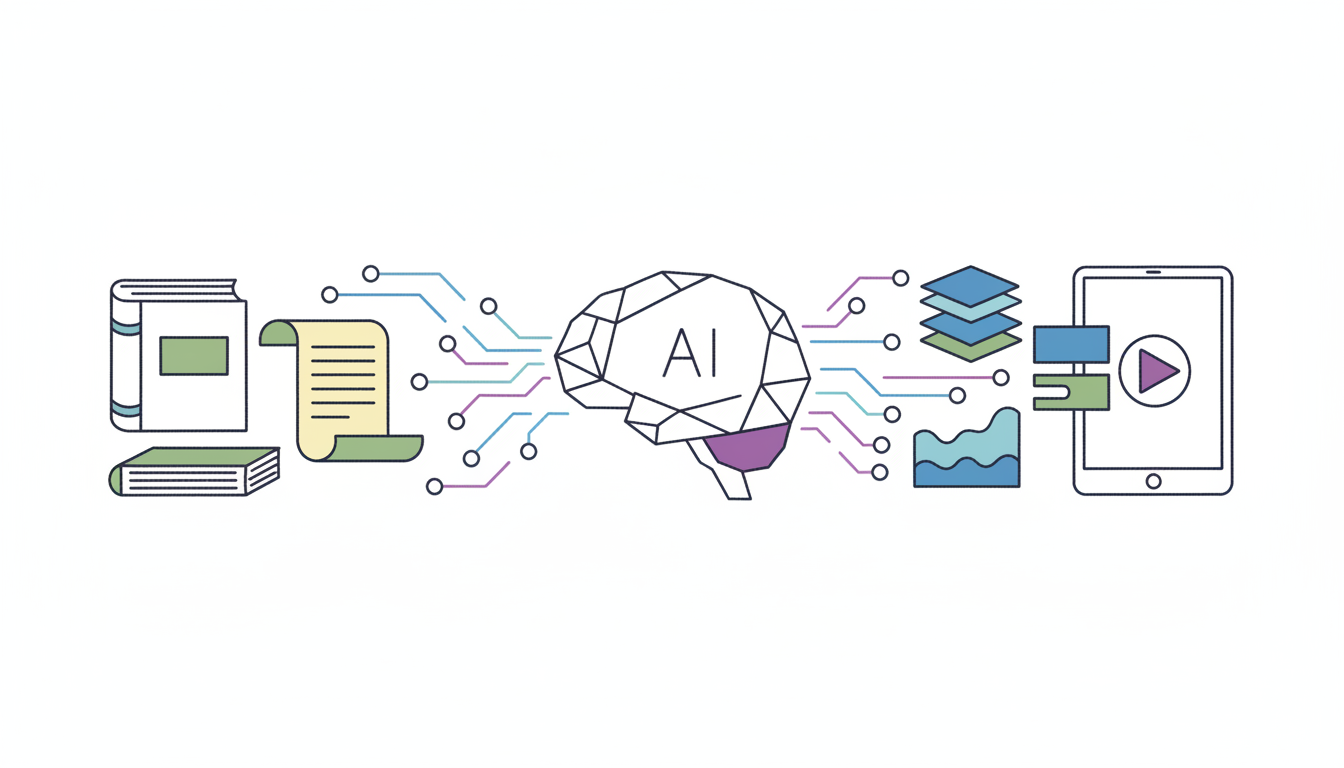
"The future is educators empowered by AI, not overshadowed by it," captured the sentiment driving this transformation. The breakthrough isn't that AI can create video content; it's that AI can preserve and amplify decades of curriculum wisdom while making it accessible in modern formats.
Research increasingly shows that teachers adopt AI most readily when it saves them between five and ten hours per week without compromising instructional quality. By 2026, this time-saving metric has become a key predictor of AI retention in schools. AI that empowers teachers strengthens classrooms; AI that overwhelms them will disappear.
This is the crucial difference. Previous technology waves asked teachers to abandon their expertise and start fresh. AI video platforms built for education understand that a veteran teacher's lesson plans aren't obstacles to overcome but treasures to preserve and enhance.
From Expensive Exception to Essential Infrastructure
The global AI education market reached $7.57 billion USD in 2025, and is projected to exceed $112 billion USD by 2034. But the real story isn't the market size; it's what districts are actually doing with these tools.
Consider the transformation happening in school budgets. Districts that once allocated $50K-200K for video production are discovering they can convert entire curriculum libraries in hours, not months. Teachers who regularly use AI save an average of 6 weeks per school year. That's not efficiency; that's liberation.
AI-powered video production now starts at $25 per finished minute, with total costs ranging from $40–$75 per finished minute for high-quality educational content. Compare that to traditional production costs, and you're looking at 75% cost reduction while dramatically improving speed and customization capabilities.
Real Districts, Real Results
The case studies emerging from 2026 implementations tell a compelling story. Districts aren't just saving money; they're fundamentally changing how they approach curriculum development.
Instead of choosing between outdated textbooks and expensive video production, schools are converting their existing materials into engaging, standards-aligned content. A majority of district leaders are demonstrating how AI can assist with tasks like lesson planning and content differentiation, introducing tools such as ChatGPT or education-specific software like MagicSchool.
69% of teachers said AI tools have improved their teaching methods, while 55% agreed that it has given them more time to interact directly with students. As 2026 unfolds, the use of AI-powered instruction is expected to continue growing amid rising teacher workload and burnout.
These aren't pilot programs anymore. They're permanent infrastructure investments that free teachers to do what only humans can do: build relationships, provide nuanced feedback, and inspire learning.
The Infrastructure Mindset
The most defining trend of 2026 is the clear movement away from generic AI tools toward platforms purpose-built for education. Education-specific AI platforms address gaps by embedding pedagogical structure directly into the system, understanding learning objectives, grade-level expectations, assessment logic, and instructional flow.
This is what infrastructure looks like in education: invisible, reliable, and purpose-built. Just as we don't think about electricity when we flip a switch, educators shouldn't think about video production when they want to convert curriculum materials.
The revolution isn't in the technology; it's in the mindset shift. We're moving from "How can we afford to digitize our curriculum?" to "How can we afford not to?"
What This Means for Your Institution
If your district is still debating whether AI video belongs in curriculum development, you're asking the wrong question. The question isn't whether to adopt this technology; it's how quickly you can implement it effectively.
Student learning gains will correlate with the quality and specificity of instructional leadership and teacher support more than product selection in 2026. The schools that succeed won't be those with the fanciest technology but those that understand how to preserve pedagogical excellence while making it accessible to every student.
The curriculum revolution has arrived. It's not dramatic or disruptive. It's simply the moment when creating great educational content becomes as natural as opening a lesson plan. And that moment is now.
Ready to transform your curriculum without transforming your teaching? Learn how EduTransform makes AI video conversion effortless for your district while preserving every bit of your pedagogical expertise.
EdTech Curriculum Delivery
EduTransform is an AI-powered curriculum transformation platform designed for K-12 school districts and higher education
Discover what we're building
Learn more about EdTech Curriculum Delivery and get started today.
Visit EdTech Curriculum Delivery