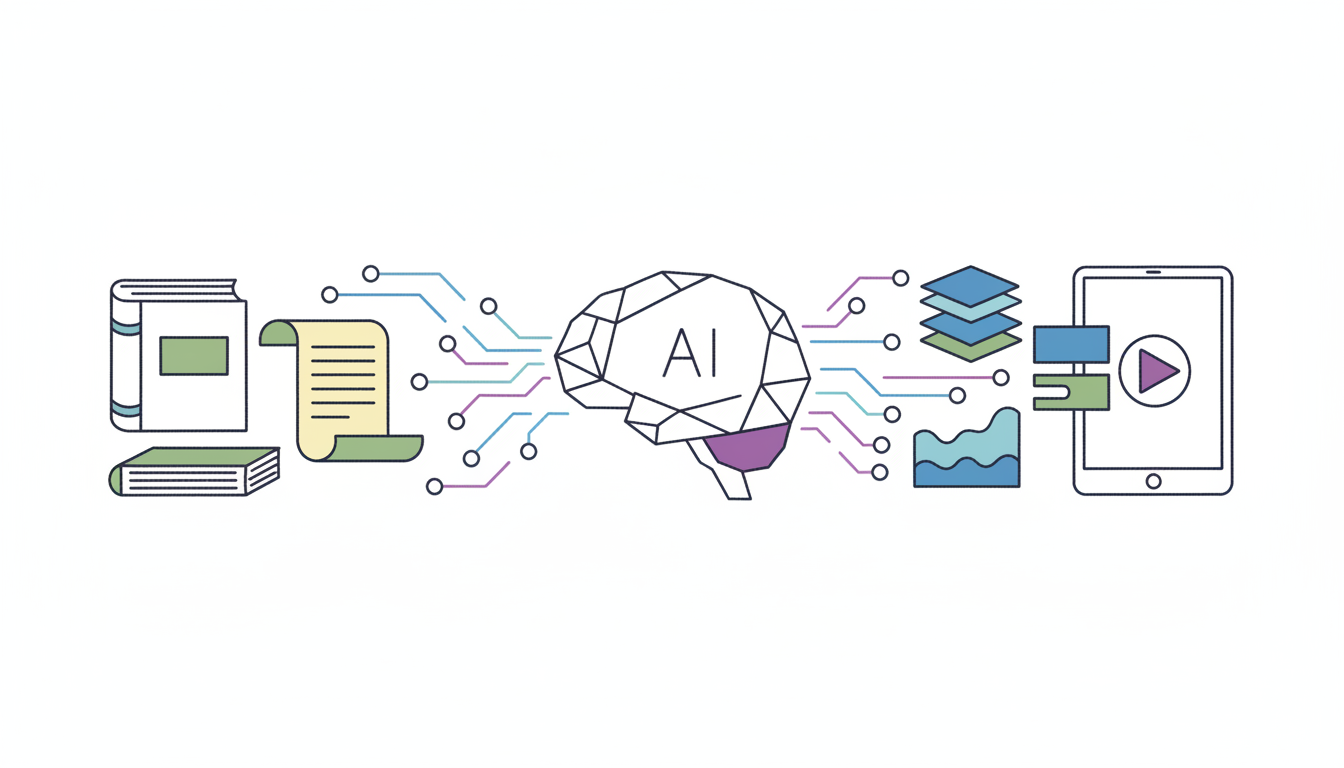
The Standards-First Advantage: Why Educational AI Beats Generic Tools
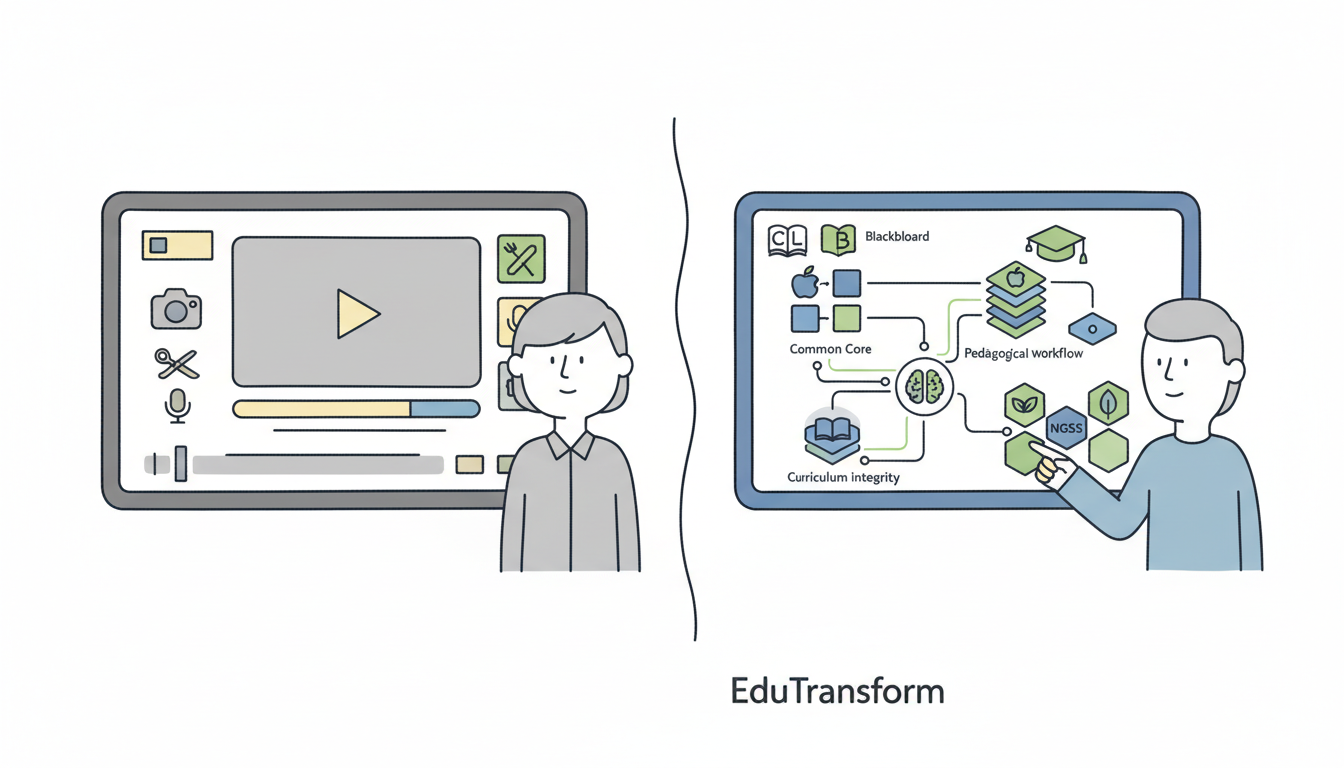
The Standards-First Advantage: Why Educational AI Beats Generic Tools
Educational institutions are drowning in AI options. From over 1,550 GenAI SaaS applications tracked in 2025 to the growing pressure to "modernize" curriculum delivery, districts and universities face a critical choice: embrace generic video platforms or invest in purpose-built educational AI.
The difference isn't just about features. It's about understanding what makes education fundamentally different from corporate content creation.
The Problem with Generic AI Tools
Generic AI video platforms like Synthesia and InVideo AI have captured headlines with their impressive capabilities. These platforms leverage advanced artificial intelligence to create engaging training videos, explainer content, tutorials, and onboarding materials in minutes rather than weeks. They promise cost reductions and time savings that sound appealing to budget-conscious administrators.
But here's where things get complicated. These tools are not yet ready to replace traditional video production for complex narratives, emotional storytelling, or anything requiring nuanced human performance. More importantly, they lack the educational context that transforms content from mere information delivery into genuine learning experiences.
When an instructor uses a generic tool to convert a biology lesson into video, the platform doesn't understand pedagogical principles. It can't align content to Common Core standards automatically. It doesn't recognize the difference between scaffolding concepts and presenting disconnected facts.
How Standards Alignment Actually Works
More than 40 states have adopted or adapted NGSS to align with their national science teaching standards, while 41 states have adopted CCSS as of 2021, representing a much faster rate of adoption than NGSS, which has been adopted by 26 states and D.C.
Education-specific AI understands this landscape. It recognizes that the NGSS include the appropriate learning goals aligned with Mathematics Common Core State Standards, allowing an opportunity both for science to be a part of a child's comprehensive education as well as ensuring an aligned sequence of learning in all content areas.
This isn't just about checking compliance boxes. Real standards alignment means understanding the three-dimensional learning model that defines modern science education: Science and Engineering Practices (SEPs), Crosscutting Concepts (CCCs), and Disciplinary Core Ideas (DCIs). Generic platforms treat these as buzzwords. Educational AI treats them as architectural principles.
The Canvas and Blackboard Integration Reality
Instructure Canvas and D2L Brightspace continue to increase in popularity, while Canvas leads the US higher education market with 35%+ share. But adoption statistics tell only part of the story.
Institutional adoption isn't just about features. It's about ecosystem integration. Canvas obtained higher market share in educational software because it allows instructors to integrate trusted third-party applications such as Google Docs, and provides a platform designed for students, instructors and institutions to utilize features for professional development and academic inquiry worldwide.
Educational AI that integrates natively with existing LMS infrastructure removes adoption friction. Teachers don't need to learn new workflows or export content between platforms. Districts don't need to retrain staff on new systems. The AI becomes invisible infrastructure that enhances existing practices rather than replacing them.
The Hidden Cost of Shadow AI in Education
Perhaps the most underestimated risk facing educational institutions is shadow AI adoption. More than 80% of workers use unapproved AI tools, and IBM's 2025 Cost of Data Breach Report found that one in five organizations has already experienced a breach linked to unsanctioned AI.
In education, these stakes are even higher. 84% of faculty and administrators already use AI tools, and 93% expect that use to grow, while concerns about bias, privacy, and security have risen sharply. An instructor using a public AI tool to personalize a lesson plan by pasting in student data, or a staff member uploading internal documents to draft communications may seem harmless, but if the tools aren't approved or secure, no one knows where that data goes or how it's used.
The financial impact is measurable. Shadow AI incidents cost organizations $650,000 or more than standard breaches on average, yet most organizations remain blind to the risk.
Educational institutions need governance frameworks specifically designed for their unique compliance requirements, student privacy obligations, and academic freedom principles.
How Educational AI Preserves Curriculum Integrity
The technical architecture matters. While generic platforms optimize for viral content and marketing metrics, educational AI optimizes for learning outcomes and pedagogical effectiveness.
This means understanding content progression and conceptual scaffolding. Educational AI recognizes when a physics concept requires mathematical prerequisites, or when historical context needs to precede literary analysis. It preserves the intentional sequencing that experienced educators have refined over years of classroom practice.
Educational AI also maintains semantic relationships between concepts. When transforming a chemistry unit, it understands that atomic structure connects to periodic trends, which connects to chemical bonding, which connects to molecular geometry. Generic platforms see these as disconnected topics to be independently processed.
Making the Strategic Choice
The decision between educational AI and generic tools isn't about current capabilities. It's about recognizing that education is fundamentally different from corporate training or marketing content creation.
85 percent of teachers and 86 percent of students used AI during the 2024 to 2025 school year, signaling that the question isn't whether to adopt AI, but how to adopt it responsibly.
Generic tools will always compete on features and cost. Educational AI competes on outcomes and integration. Generic tools promise efficiency. Educational AI promises pedagogical effectiveness while delivering efficiency.
For institutions serious about digital transformation that preserves educational quality, the choice is clear. Standards-first design isn't a nice-to-have feature. It's the foundation upon which sustainable educational technology is built.
When your district is ready to transform curriculum without compromising pedagogical integrity, learn more about purpose-built educational AI that understands the difference between content creation and learning design.
EdTech Curriculum Delivery
EduTransform is an AI-powered curriculum transformation platform designed for K-12 school districts and higher education
Discover what we're building
Learn more about EdTech Curriculum Delivery and get started today.
Visit EdTech Curriculum Delivery